
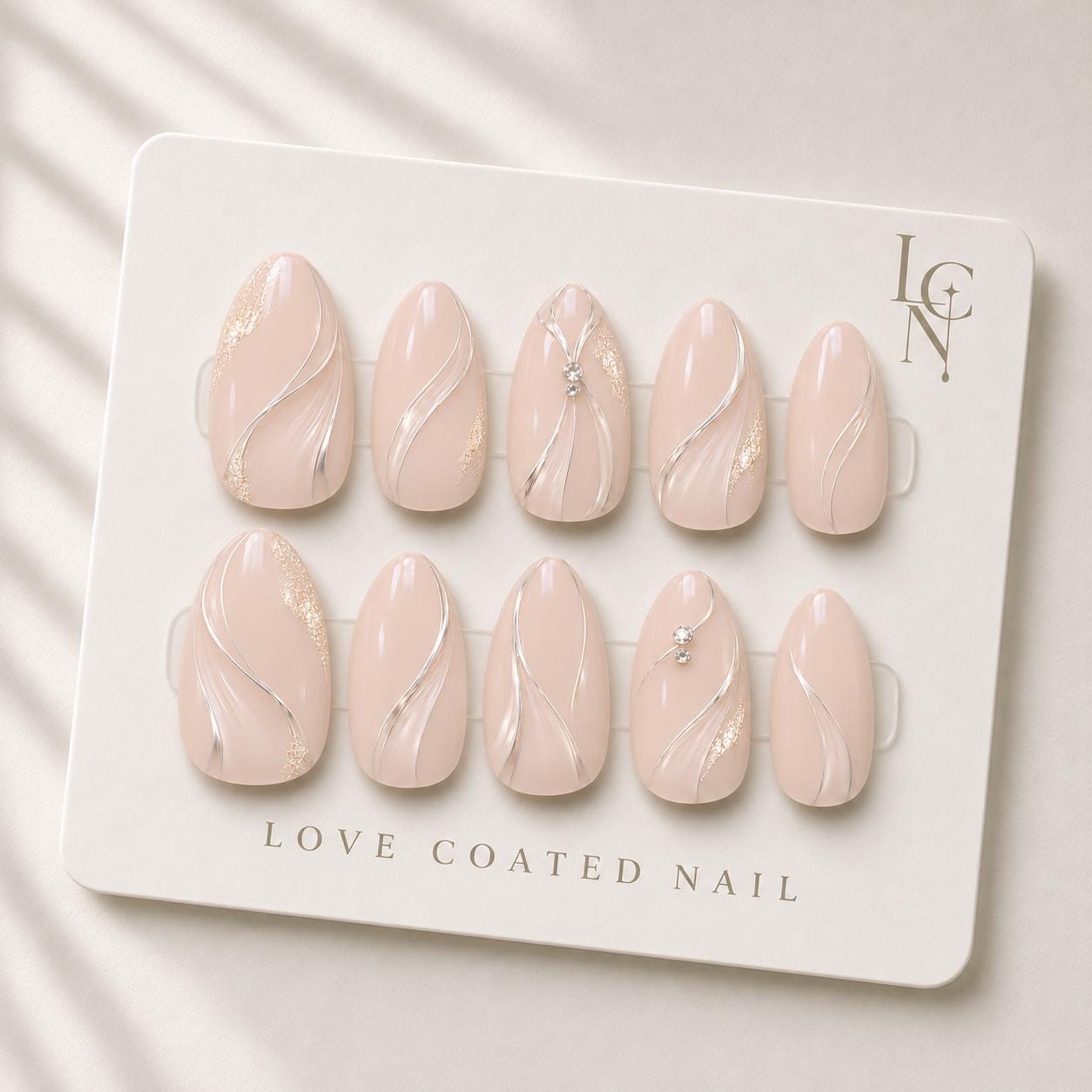
Spring designers are embracing a subtle yet striking aesthetic: nude nail bases overlaid with delicate metallic swirls. This combination appears in runway collections, Instagram feeds, and now in press‑on sets, offering a look that feels both understated and celebratory. The trend is defined by a soft peach‑nude or beige foundation that acts as a neutral canvas, while thin, reflective lines of silver, gold, or rose‑metal glide across the surface in a swirling pattern. The result is a manicure that catches the light without overwhelming the overall palette, making it an ideal choice for the fresh, airy vibe of spring.
The Rise of Nude‑Based Metallic Swirl Nails
The nude‑base‑plus‑metallic‑swirl look emerged as designers sought a bridge between minimalist nail colors and the sparkle of festival season. By keeping the base color close to natural skin tones, the metallic accents become the focal point without clashing with pastel wardrobes. Influencers have highlighted variations ranging from a single silver ribbon to intricate, multi‑color swirl designs that echo the movement of spring breezes. This trend also aligns with the broader push toward sustainable beauty, as many of the swirls are achieved with thin layers of chrome powder or foil rather than heavy pigment loads.
Choosing the Perfect Nude Base
When selecting a nude foundation, consider both undertone and the intended setting. A peachy‑nude works beautifully with warm metallics like champagne gold, while a cooler beige pairs well with silvery or rose‑metal swirls. The key is to match the base to your skin’s natural hue so the manicure appears seamless rather than painted on. For those with deeper complexions, a richer caramel or mocha nude can serve as a sturdy canvas, allowing the metallic lines to pop without creating harsh contrast. Testing a small strip on the inner wrist can quickly reveal how the shade interacts with your skin tone.
Metallic Swirl Techniques and Finishes
Artists achieve the swirl effect through several methods. Chrome powder applied with a fine brush creates a reflective line that mimics liquid metal. Foil stamping adds a subtle texture, while a thin layer of metallic nail polish can be dragged with a brush to form organic curves. The finish can range from high‑gloss, which maximizes shine, to a more satin sheen that softens the sparkle for daytime wear. Mixing finishes—such as a glossy silver line on a matte nude base—adds depth and visual interest, a technique frequently seen in high‑fashion editorials.
Nail Shape and Length Considerations
The swirl pattern interacts differently with various nail shapes. Short almond or oval nails provide a graceful curve that complements the flow of the metallic line, allowing the swirl to follow the natural arch of the nail. Wider square or squoval shapes can accommodate broader swirls or multiple intersecting lines without looking crowded. Length also matters: longer nails give the artist more canvas for elaborate designs, while shorter nails keep the look understated and practical for everyday wear. Choosing a shape that matches your hand geometry will ensure the swirl feels intentional rather than forced.