
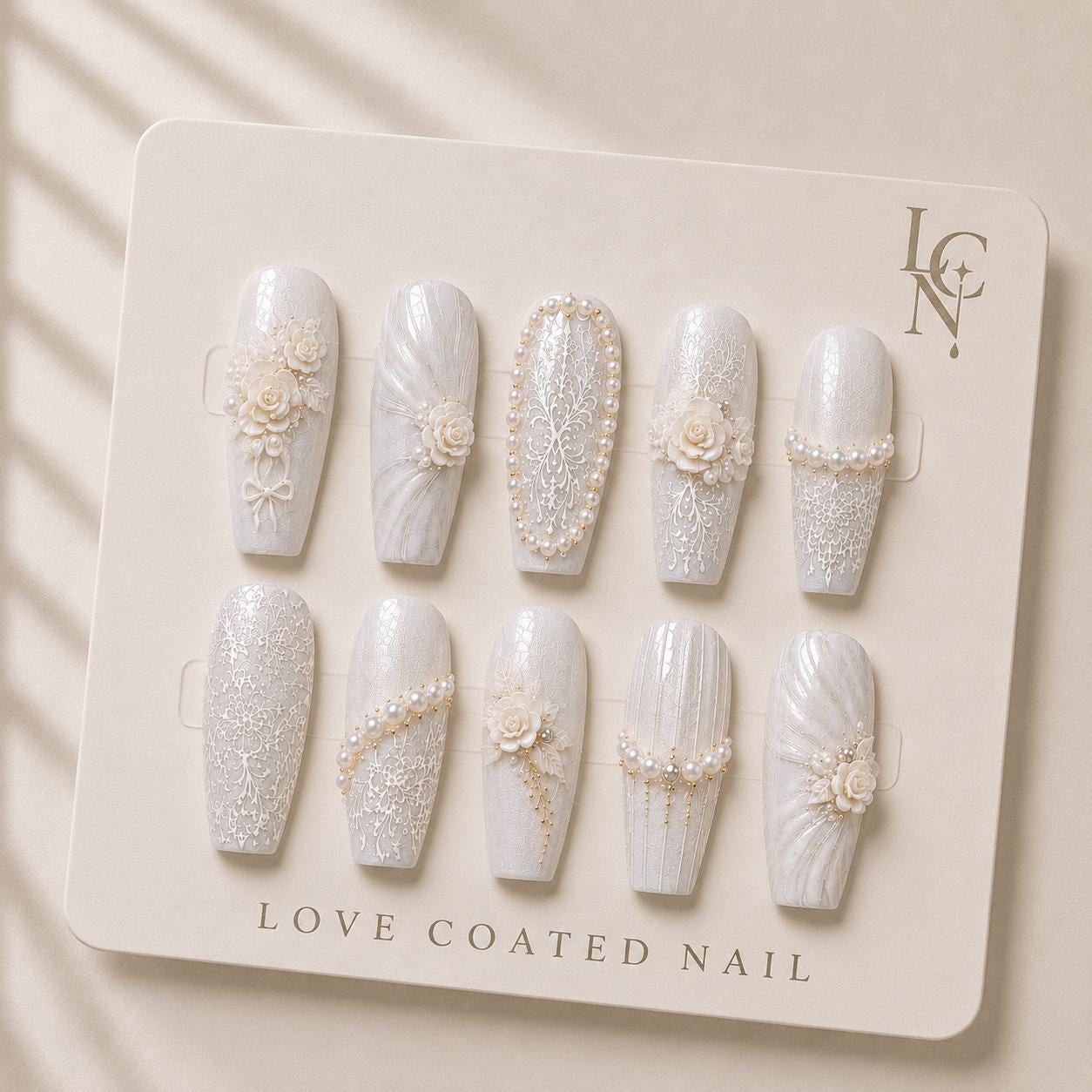
The safest way to remove press‑on bridal nails after your wedding is to soak them in warm, soapy water, gently loosen the edges with a cuticle stick, and then slide them off without forcing or pulling. This simple process protects the natural nail plate and prevents unnecessary damage.
After the ceremony, excitement often gives way to a desire to return to a more low‑maintenance routine. Press‑on nails, especially those with delicate 3D floral and pearl details like Love Coated Nail's Bridal Press‑On Nails, are designed for easy removal, but the method you choose matters. Rushing the process or using harsh chemicals can strip the natural nail’s surface, cause peeling, or leave it brittle. By following a gentle, step‑by‑step approach, you preserve the health of your nail bed while still enjoying the convenience of reusable press‑ons.
Begin by gathering the tools you will need: a bowl of warm water, a mild hand soap, a soft nail file, a cuticle stick (the wooden or plastic kind included in the Love Coated Nail kit works well), and a few cotton pads soaked in alcohol for any residual adhesive. Warm water softens the glue and any residual gel, making it easier for the nails to release. Add a few drops of soap to create a mild lather that further loosens the bond.
Submerge your hands in the bowl for three to five minutes, allowing the heat to penetrate the adhesive. While you wait, you can gently massage your fingertips to encourage the glue to dissolve. Once the nails feel more pliable, remove your hands and pat them dry with a clean towel. At this point, the edges of the press‑on nails should lift slightly. Using the cuticle stick, carefully work around the perimeter of each nail, applying just enough pressure to separate the tip from the natural nail. If you encounter resistance, return the nail to the warm water for another minute; patience prevents the need to pry or yank.
When a nail begins to separate, use your fingertips to slide it off in a slow, controlled motion. If any part of the press‑on remains attached, repeat the soaking and gentle lifting process. Avoid using metal tools or pulling sharply, as these actions can lift the natural nail plate or cause micro‑tears. Once all the press‑ons are removed, you may notice a thin film of adhesive residue on the nail surface. Dampen a cotton pad with a small amount of alcohol and gently rub the residue away. The alcohol evaporates quickly and does not dry out the nail when used sparingly.
After the physical removal, the next priority is after‑care. Your natural nails have just undergone a mild chemical exposure and may feel slightly softer. Start by filing the surface lightly with a fine‑grit nail file to smooth any uneven edges and prevent snagging. Follow this with a nourishing cuticle oil or a nail strengthener containing keratin or calcium. Apply the oil daily for the first week, massaging it into the cuticle and nail plate to restore moisture and promote healthy growth.
Hydration extends beyond the nails themselves. Keep your hands moisturized with a fragrance‑free hand cream, especially after washing. This helps maintain the flexibility of the nail plate and reduces the risk of splitting. If you notice any lingering stickiness or a faint adhesive smell, a second brief soak in warm, soapy water can help clear any remaining traces.