
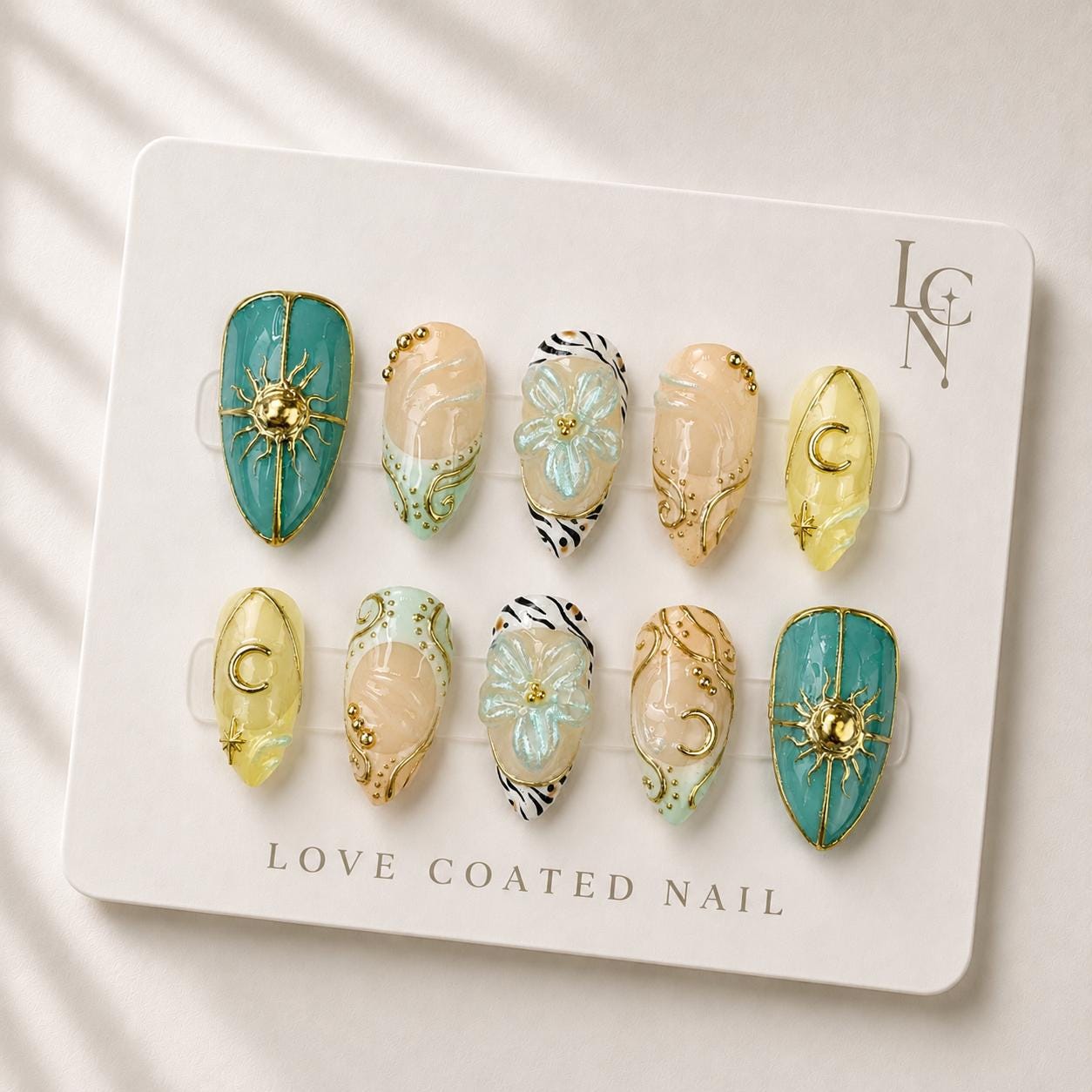
Gold chrome detailing on press‑on nails can lose its shine when exposed to salty sea air, but with the right precautions the sparkle stays vivid for days. The key is to protect the thin metal‑based layer from moisture, salt crystals, and abrasive sand, all of which can oxidize or wear down the finish.
Understanding the Chemistry of Chrome in a Marine Environment
Gold chrome on press‑on nails is a pigment suspended in a polymer gel that reflects light like metal. When salt water contacts the surface, tiny droplets leave behind sodium chloride crystals as the water evaporates. Those crystals attract moisture from the air, creating a micro‑humid environment that can promote oxidation of the metallic particles. Over time this leads to a dull, matte appearance. The process is accelerated by heat and UV radiation, which increase the kinetic energy of molecules and speed up chemical reactions.
Choose the Right Adhesive for Beach Conditions
Adhesive tabs are convenient, but they rely on a thin film of pressure‑sensitive polymer that can soften with heat and humidity. In salty air, the tabs may lose grip after a few hours, especially if the nails are exposed to sea spray. Nail glue forms a stronger chemical bond that is less sensitive to humidity, extending wear time to the 3–4 week range noted in the product description. For a beach day, apply a thin layer of glue to the nail bed, press firmly, and allow the glue to cure for at least two minutes before entering the water.
Pre‑Beach Preparation: Seal and Protect
Before heading to the shore, give the chrome surface an extra barrier. A clear, breathable top coat designed for gel nails creates a thin film that repels water while allowing the underlying polymer to flex. Apply one thin layer, let it cure under a UV lamp or LED light for the recommended time, and avoid thick coats that can trap moisture. This step is especially useful for the gold chrome detailing on Love Coated Nail’s Beach Press‑On set, as the glossy salon‑quality finish already provides a base layer of protection.
Managing Salt and Sand During the Day
Even with a sealed surface, direct contact with sand can act like fine sandpaper. When you sit on a beach towel or walk on gritty sand, tiny particles can abrade the chrome pigment. To minimize this, wipe the nails with a soft, damp cloth after swimming to remove salt residue, then pat dry with a lint‑free towel. Avoid rubbing the nails, which can grind away the finish. If you plan to spend several hours in the surf, consider wearing a lightweight glove or applying a thin layer of petroleum‑free hand cream on the fingertips—this creates a sacrificial barrier that can be washed off later.
Post‑Beach Care and Restoration
After a day by the ocean, give the nails a gentle cleaning routine. Use the alcohol wipes supplied with the set to remove any lingering salt or sunscreen residue, then follow with a soft nail file to smooth any minor scratches on the chrome surface. If the shine has dulled, a light polishing with a non‑abrasive buffing pad can restore reflectivity without damaging the underlying pigment. Store the reusable nails in a dry container with a silica packet to keep humidity low until the next use.