
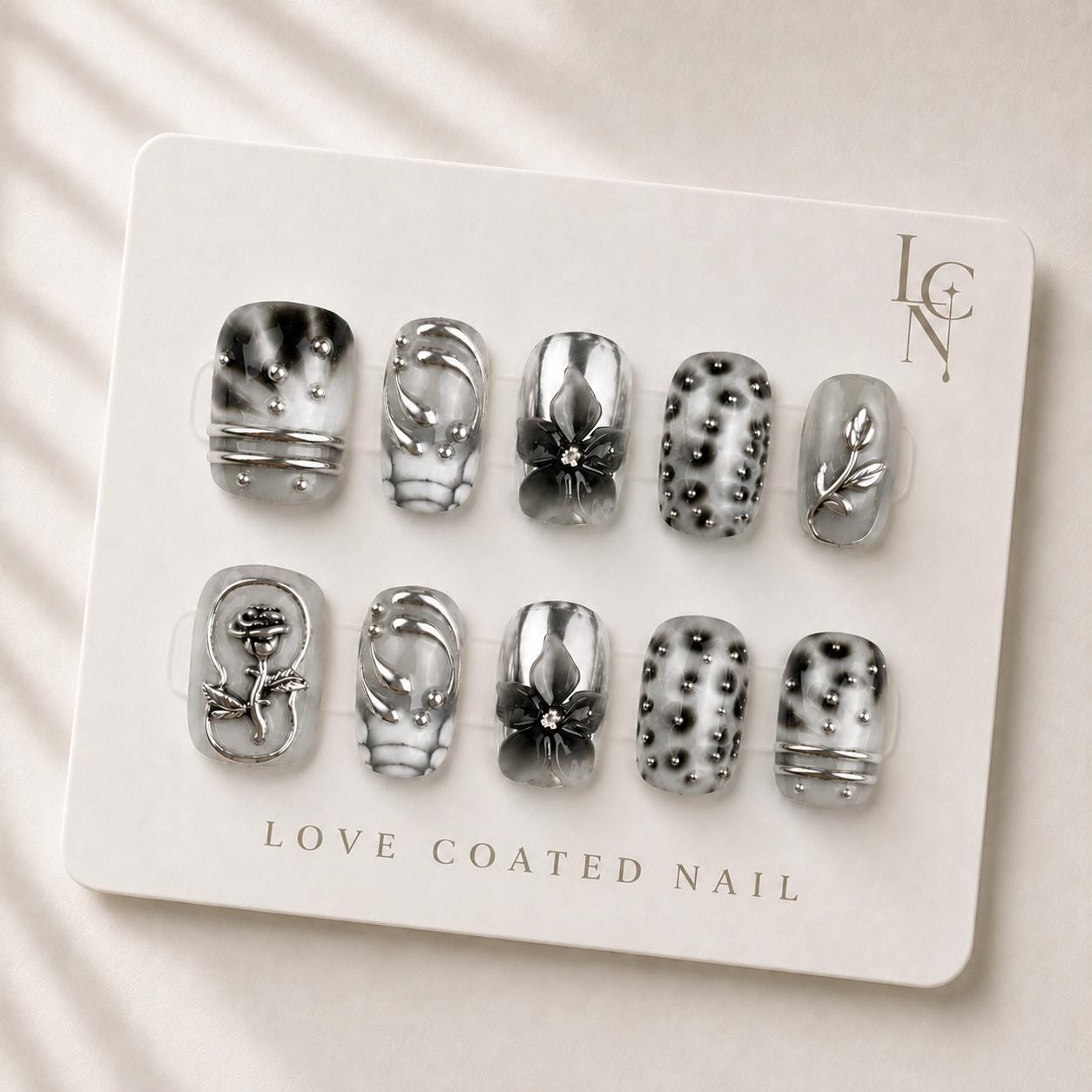
Black marble press‑on nails can slightly change the way your fingertips feel against strings, keys, or reeds, but they do not typically impede a musician’s ability to maintain a secure grip. The smooth, glossy finish of the marble pattern adds a subtle sheen, while the raised marble veins create a faint texture that some players notice when they press down on an instrument. In most cases, the effect is minimal and can be managed with a few simple adjustments.
Feel and Tactile Feedback
The primary concern for musicians is the feedback they receive from the instrument. Black marble designs on press‑on nails are printed onto a soft gel tip, which means the underlying surface remains the same gel material. The marble pattern itself is a visual element; it does not add significant bulk or roughness. However, the slight variation in gloss can affect how light reflects off the nail, which some players interpret as a change in slip. If you rely heavily on tactile cues—such as a violinist feeling the bow hair or a guitarist sensing string vibration—testing the nails in a low‑volume setting first can help you gauge any perceived difference.
Grip on Different Instruments
String instruments (guitar, violin, cello) require a firm yet flexible grip. The thin profile of Love Coated Nail’s black marble press‑ons keeps the fingertip’s contact area close to that of natural nails, so most players experience only a marginal shift in pressure. For wind instruments (flute, clarinet, saxophone), the seal created by the fingertip is more about surface area than texture, so the marble pattern does not interfere with air control. Percussionists who use sticks or mallets may notice a very slight change in how the nail slides against the stick, but the effect is usually negligible.
Managing Comfort During Long Sessions
Because the nails are lightweight and designed to sit flush with the natural nail bed, they do not add noticeable weight that could fatigue the hand. Musicians who play for extended periods should still monitor any pressure points, especially if the adhesive tabs are used for shorter wear. If you feel a subtle shift in grip, try adjusting the placement of the nail slightly higher or lower on the nail bed to find the most natural contact point. A quick press of the cuticle stick can also help the nail settle more securely, reducing any micro‑movement that might affect grip.
Practical Tips for Musicians
1. Test Before a Performance – Apply a single black marble press‑on and play a short piece to sense any change in feedback. 2. Use Glue for Longer Wear – When you need consistent grip over several days, the stronger bond of nail glue can minimize any slight movement of the nail. 3. Maintain Clean Surfaces – Residual oil on the nail can increase slip; a quick wipe with an alcohol prep pad before playing restores the intended feel. 4. Consider Finger Position – Slightly adjusting finger placement on strings or keys can compensate for any minute texture differences. 5. Store Properly Between Sessions – Keep the reusable set in a dry container to preserve the glossy finish and prevent dust from altering tactile perception.