
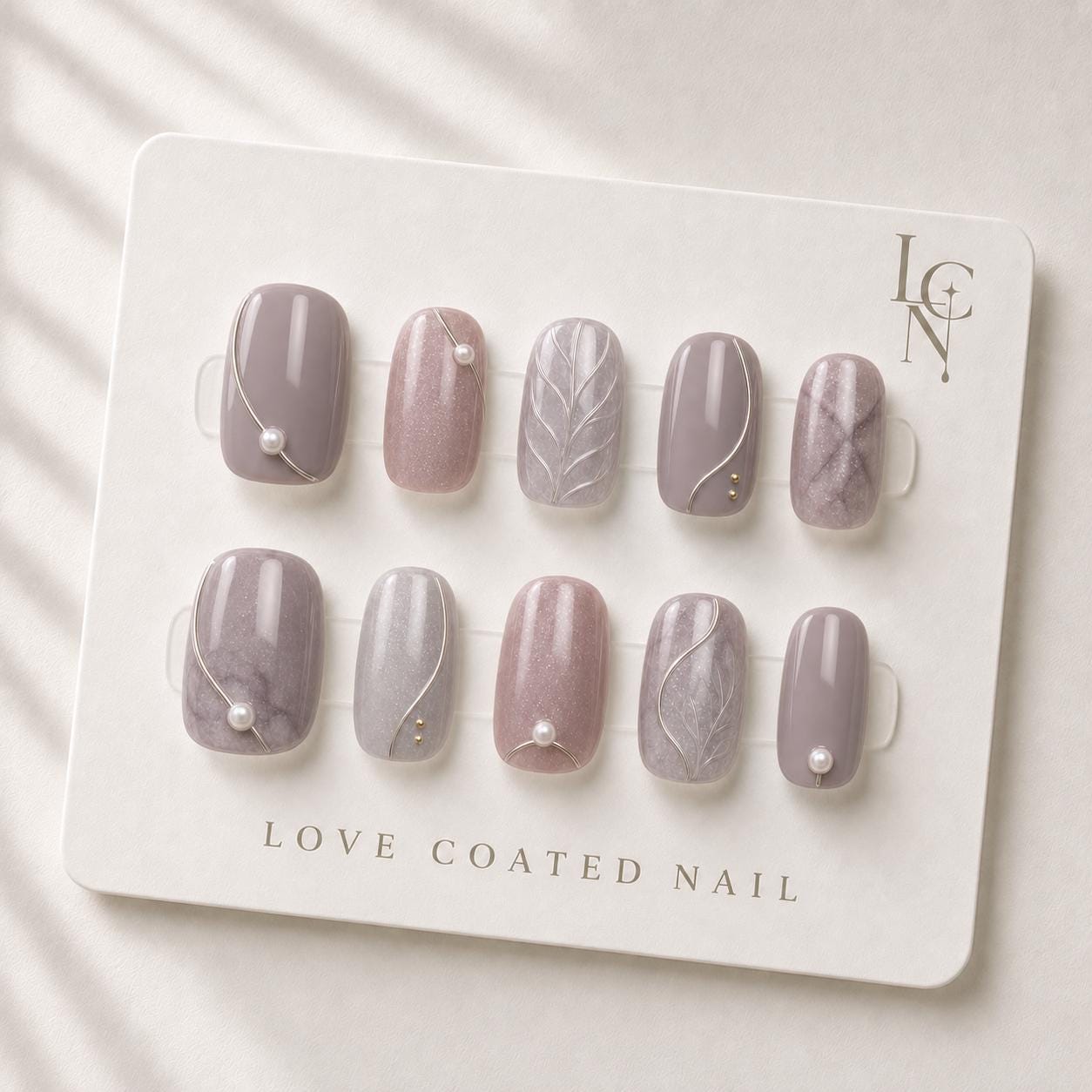
Extra short press‑on nails with 3D sculptural details can still be durable, but the raised textures change how forces are distributed across the nail surface. The raised areas create small stress points that may be more prone to chipping or breaking under heavy use, while the underlying gel base remains as strong as a flat design. Understanding these dynamics helps you choose the right care routine and set realistic expectations for wear.
How Raised Textures Affect Stress Distribution
When a nail has a smooth, flat surface, forces from typing, gripping, or everyday movement are spread evenly across the gel. A 3D element—such as a pearl, gold chrome ridge, or marble emboss—adds height and creates a lever effect. The tip of the raised detail experiences higher pressure when it contacts a surface, which can lead to micro‑cracks that propagate over time. The gel underneath still provides a solid foundation, but the sculptural portion can act as a weak spot if it is very thin or if the adhesive bond is not fully cured.
Material Thickness and Layering
The durability of any press‑on nail depends heavily on the thickness of the gel layers. In the Extra Short Luxury Press On Nails from Love Coated Nail, each nail is handcrafted using premium gel with a glossy salon‑quality finish. The product description notes that the nails are made with soft gel, gel polish, pearl, chrome gel, metallic gold, and a top coat. When a 3D detail is added, the artisan typically builds it up in multiple thin layers, which can increase overall nail thickness slightly. A slightly thicker nail can resist bending, but if the sculptural layer is too delicate, it may chip more easily than the surrounding flat gel.
Impact of Nail Length on Durability
Extra short lengths naturally reduce leverage on the nail tip, which can be an advantage for durability. Because the nail does not extend far beyond the fingertip, there is less chance of the raised detail catching on objects. However, the short length also means that any 3D element is positioned closer to the nail edge, where it can be more exposed to friction. For users who type a lot or handle small objects, the combination of a short nail and a prominent raised texture may require extra caution.
Adhesive Choice and Bond Strength
The way a press‑on nail adheres to the natural nail influences how well a sculptural detail holds up. The product includes adhesive tabs and recommends glue for longer wear. Tabs provide a quick bond but can be less secure around raised textures, especially if the tab does not fully cover the base of the 3D element. Using a high‑quality nail glue creates a stronger, more uniform bond that helps keep the entire nail—including the sculptural portion—firmly attached during daily activities.
Care Practices to Preserve 3D Details
To extend the life of textured extra short nails, treat the raised areas gently. Avoid using the nail tip to pry open packages or scrape surfaces. When filing or shaping, work around the 3D element rather than directly on it, as aggressive filing can shave off the detail. Regularly clean the nails with a non‑abrasive alcohol wipe to remove oils that could weaken the adhesive bond. If a raised detail does chip, a small amount of gel glue can be applied to the spot and smoothed with a fine brush, though this is a temporary fix.