
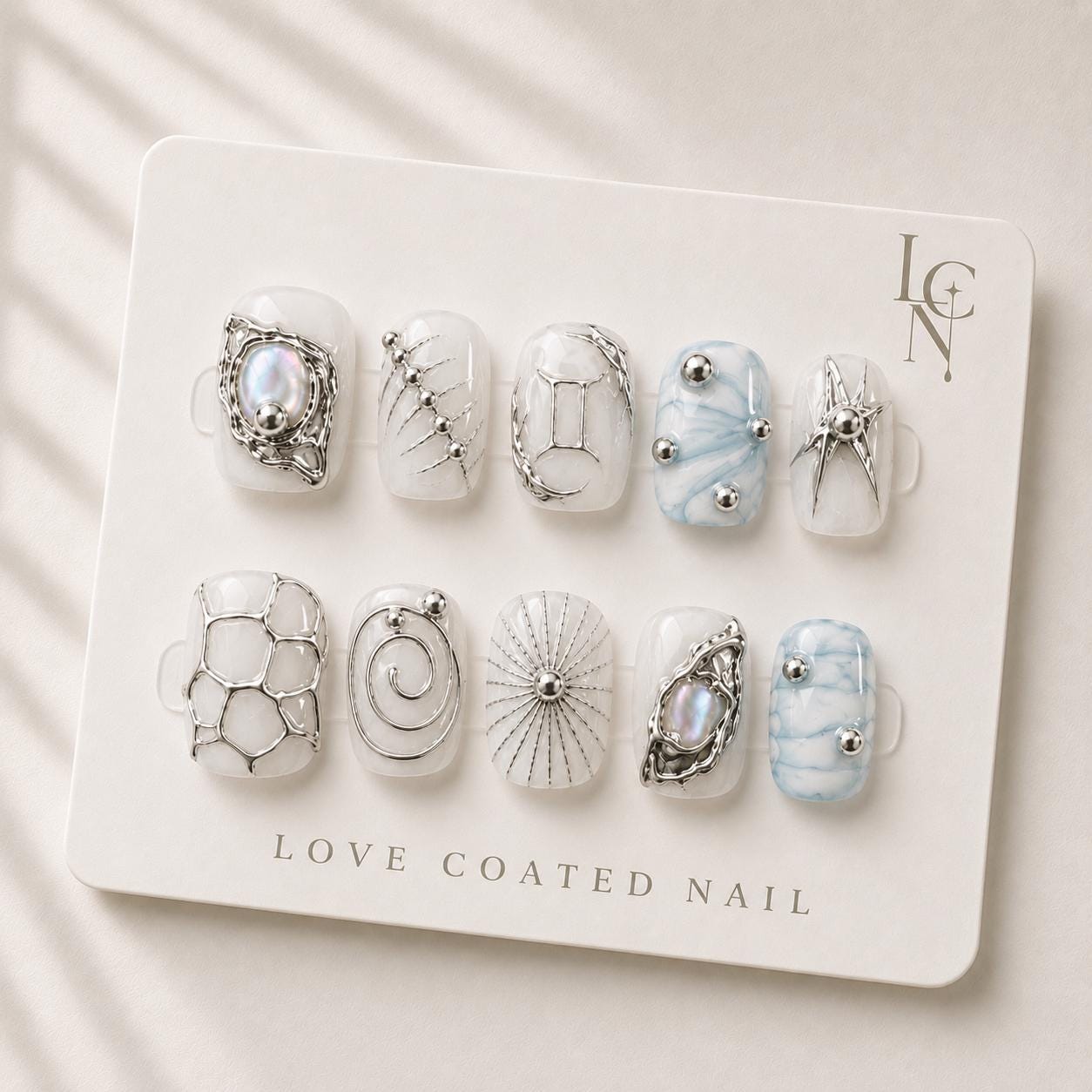
The chrome pigment used in Love Coated Nail’s luxury coastal press‑on nails is generally safe for most people, but individuals with a history of metal allergies or extremely sensitive skin may experience mild irritation. The pigment is a professional‑grade metallic powder that is sealed within a clear soft‑gel coating, which reduces direct contact with the skin. However, because the pigment sits just beneath the surface of the nail, it can still interact with the nail bed or cuticle area if the adhesive creates a seal that traps moisture.
Understanding the Chrome Pigment Composition
Love Coated Nail describes the chrome detailing as a "professional chrome pigment" applied over premium soft gel. In the nail industry, chrome pigments are typically made from fine aluminum or mica particles that are coated with a thin layer of titanium dioxide or iron oxide to achieve the reflective finish. These particles are inert and non‑soluble, meaning they do not dissolve into the skin under normal conditions. The soft‑gel base is a polymer that cures to a flexible, non‑porous film, further isolating the pigment from direct skin exposure. While the ingredients themselves are not known to be allergenic, the metallic particles can act as a mild irritant for people who react to nickel or other metals, especially if the nail adhesive creates a tight seal that prevents airflow.
Typical Skin‑Sensitivity Reactions
If a user does react, the most common signs are localized redness, itching, or a slight burning sensation around the cuticle or nail fold. In rare cases, a small rash or hives may develop. These reactions are usually short‑lived and subside once the nails are removed and the area is cleaned. It is important to differentiate between a normal adjustment period—where the skin may feel a bit tight due to the adhesive—and a true allergic response. Persistent discomfort after 24‑48 hours, spreading redness, or swelling indicates that the pigment or adhesive may be triggering a sensitivity.
Patch Testing Before Full Application
A simple patch test can help determine whether you are likely to react to the chrome pigment. Apply a single press‑on nail to a less visible finger, using the adhesive tabs that come with the set. Leave it on for the recommended 1‑2 days and monitor the skin for any signs of irritation. If none appear, you can proceed with the full set. If you notice redness or itching, remove the nail, cleanse the area with a gentle cleanser, and consider using a non‑chrome version of the press‑on set or a different adhesive method.
Application and After‑Care Tips for Sensitive Skin
When you decide to wear the coastal press‑on nails, follow these steps to minimise potential irritation. First, ensure your natural nails are clean, dry, and free of oils. Lightly buff the surface to improve adhesive contact, but avoid over‑buffing which can thin the nail plate and increase sensitivity. Use the provided adhesive tabs rather than glue if you have a known sensitivity to nail glues, as the tabs contain fewer chemical additives. After applying the nails, give the skin a few minutes to breathe before sealing the area with a light layer of a hypoallergenic barrier cream around the cuticle. Throughout the wear period, keep the fingertips dry and avoid prolonged exposure to water, which can weaken the adhesive seal and trap moisture against the skin. When it is time to remove the nails, soak them in warm, soapy water rather than pulling them off abruptly; this reduces mechanical stress on the cuticle and lowers the chance of irritation.