
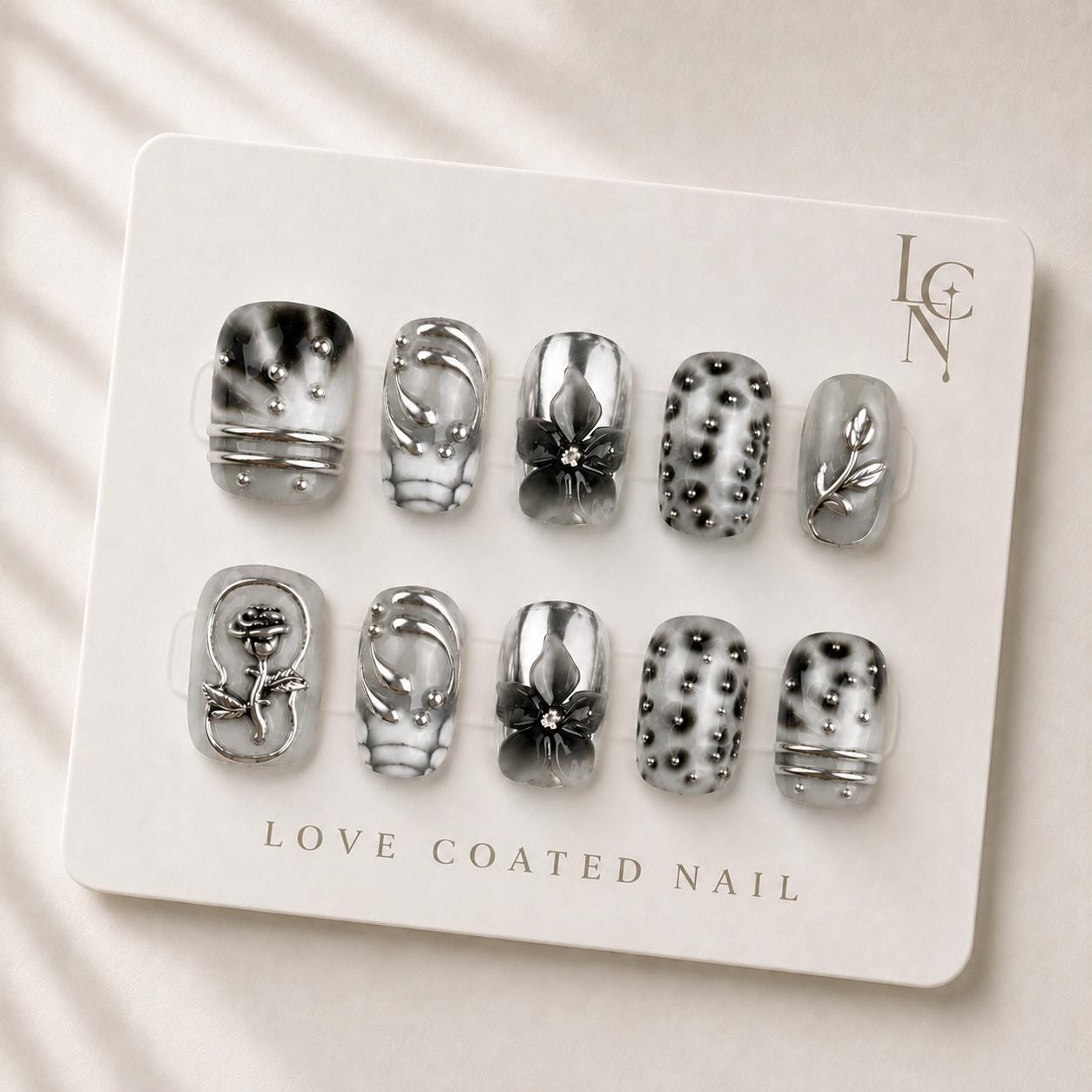
Soft gel tips on gothic press‑on nails are generally safe for most people, but individuals with sensitive skin should examine the specific ingredients and material properties before applying them. The soft gel tip itself is a polymer matrix that is cured to a flexible yet durable form; it does not inherently contain common irritants, yet the accompanying gel polish, adhesive tabs, and decorative metals can introduce allergens.
Material Composition and Common Allergens
Love Coated Nail’s gothic press‑on set lists its primary materials as Soft Gel Tips, Gel Polish, Builder Gel, 3D Sculpting Gel, Silver Chrome Gel, and Chrome Powder. Soft gel tips are made from a methacrylate‑based polymer that is widely used in professional gel extensions. In isolation, this polymer is low‑risk for contact dermatitis. However, the gel polish layer often contains pigments, plasticizers, and photoinitiators such as benzoyl peroxide or camphorquinone, which have been reported to trigger reactions in a small subset of users. Silver chrome finishes involve metallic particles that can oxidize and release nickel or other trace metals, both known sensitizers for people with metal allergies.
Manufacturing Process and Skin Compatibility
The manufacturing process for press‑on nails includes curing the soft gel tip under UV or LED light, then applying gel polish and metallic embellishments. Because the curing is performed in a controlled environment, residual monomers are typically minimized, reducing the likelihood of irritation. Nonetheless, incomplete curing or storage in high humidity can leave trace uncured monomers that may leach onto the skin. The adhesive tabs supplied with the set are pressure‑sensitive adhesives; some contain acrylate compounds that can cause contact irritation, especially on thin or compromised cuticles.
Practical Precautions for Sensitive Users
Before applying the full set, a patch test is advisable. Apply a single tip to a small area of the nail bed or inner forearm, secure it with an adhesive tab, and leave it in place for 24 hours. Observe any redness, itching, or swelling. If no reaction occurs, the user can proceed with the full application. Keeping the nail bed clean and using the provided alcohol prep pads helps remove oils that could increase adhesive adhesion and potential irritation. For those who know they react to nickel, opting for the matte black marble designs that lack metallic chrome may reduce exposure.
Recognizing and Responding to Reactions
Early signs of a reaction include localized itching, erythema, or a burning sensation around the cuticle. If these symptoms appear within the first few hours, remove the press‑on nails promptly, cleanse the area with mild soap, and apply a hypoallergenic moisturizer. Persistent symptoms warrant a consultation with a dermatologist, who can perform a patch test to identify the specific allergen—whether it is a pigment, metal, or adhesive component.