
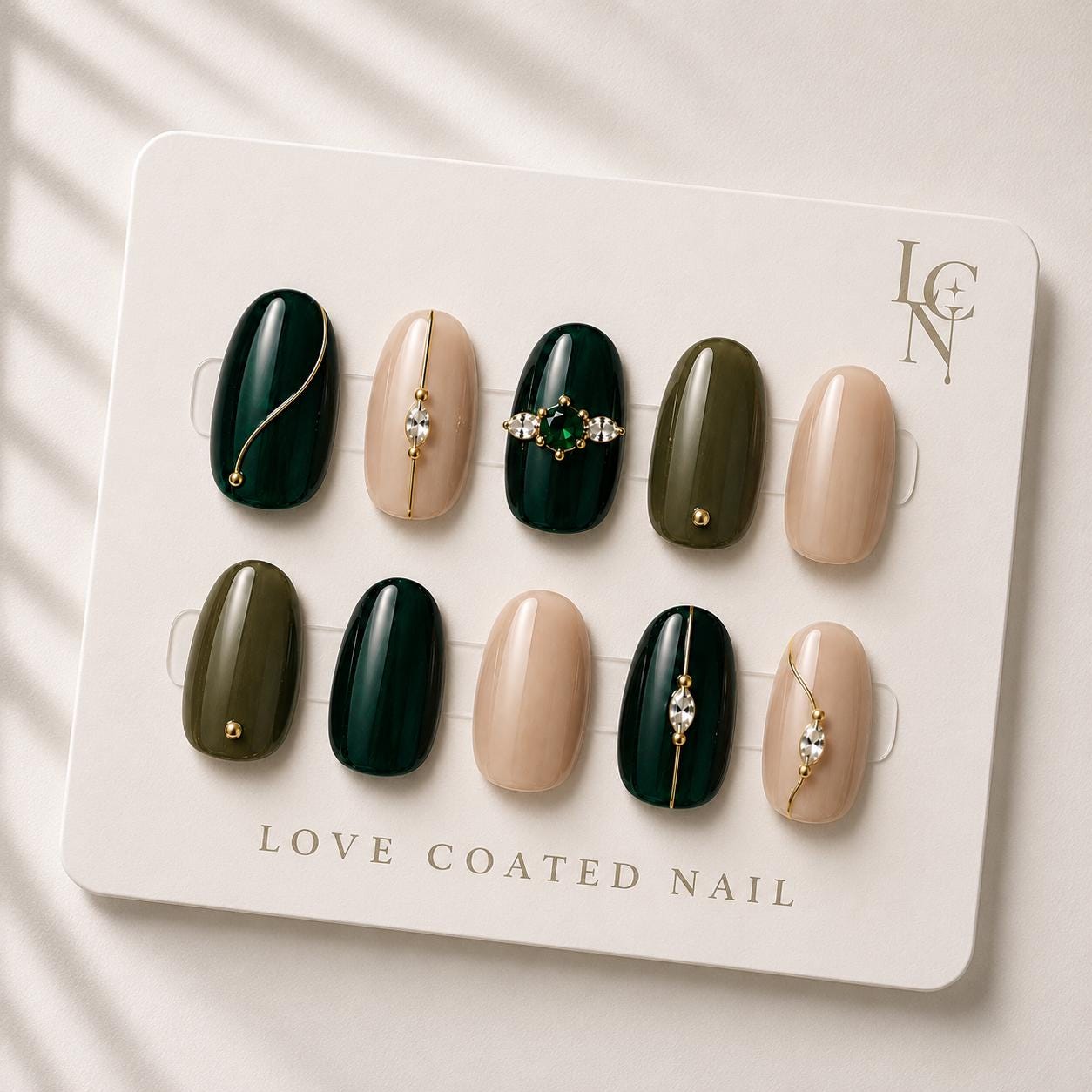
Reusable press‑on nails are generally more eco‑friendly than traditional acrylic nails because they are built to be applied, removed, and re‑applied many times, which dramatically cuts the amount of material that ultimately ends up in landfills. Instead of discarding a whole set after a single wear, a reusable set can serve dozens of applications with proper care, lowering both resource consumption and waste generation.
Lifecycle and Reuse Potential
Press‑on nails are designed for multiple cycles of wear. A single set, such as the Emerald Green Press On Nails from Love Coated Nail, can stay on for up to four weeks when glued, and each nail can be removed and re‑attached many times. This reuse potential means that the embodied energy of producing the nails is amortized over many applications. In contrast, acrylic nails are created by mixing polymer powder with liquid monomer, applied as a single, permanent overlay that must be chemically removed and replaced after a few weeks. The removal process generates additional chemical waste, and the new acrylic batch requires fresh raw materials, creating a continuous loop of production and disposal.
Material Production and Energy Use
Manufacturing press‑on nails typically involves cutting, shaping, and hand‑painting pre‑formed plastic or resin blanks. Because Love Coated Nail produces these nails in small, handcrafted batches, the process avoids the large‑scale polymerization plants used for acrylic powder, which consume significant energy and emit volatile organic compounds (VOCs). Acrylic systems also rely on liquid monomers that are petro‑derived and require careful handling to prevent exposure. While press‑ons still use plastic, the overall material intensity per wear cycle is lower because the same piece is reused rather than discarded after one use.
Waste Generation and End‑of‑Life
When acrylic nails are removed, the leftover polymer and the chemical remover contribute to hazardous waste streams. The packaging for acrylic kits often includes multiple plastic containers, foil wrappers, and disposable applicators, all of which add to landfill volume. Press‑on kits generate waste primarily from adhesive tabs, packaging, and the occasional broken nail. These components are generally non‑hazardous and can be recycled where facilities exist. Moreover, because a reusable set can last months, the frequency of repurchasing—and thus the cumulative packaging waste—is substantially reduced.
Practical Tips for Reducing Nail‑Related Footprint
Choosing a reusable press‑on set is the first step toward a greener nail routine. To maximize longevity, follow the care instructions: keep the nails clean, store them in a dry place, and avoid using harsh acetone when removal is not required. When you need to replace a nail, simply swap the damaged piece rather than discarding the whole set. Opt for adhesive tabs included with the set instead of single‑use glue whenever the shorter wear time meets your needs, as tabs generate less chemical waste. Finally, recycle any plastic packaging or tabs according to local guidelines. By treating reusable press‑ons as a durable accessory rather than a disposable product, you can enjoy stylish nails while minimizing environmental impact.