
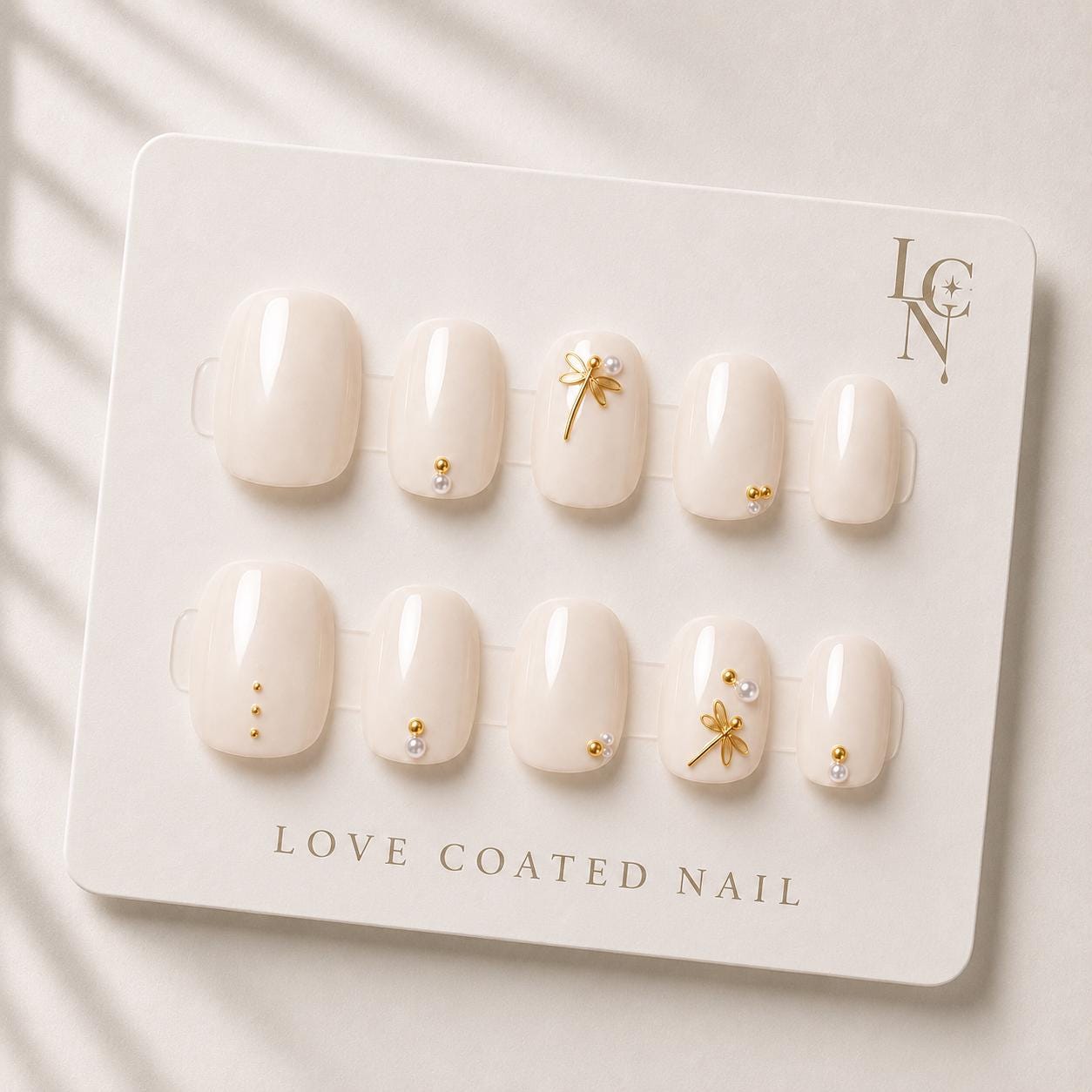
Yes, reusable luxury press‑on nails are generally a more sustainable choice than acrylic extensions because they can be applied, removed, and reused multiple times, which reduces the amount of material that ends up as waste and often requires less energy and chemicals to produce.
Material and Production Footprint
Press‑on nails like the Dragonfly Press On set are handcrafted from high‑quality materials that are cut and shaped in a studio setting. Because each set is made in relatively small batches, the manufacturing process tends to use less energy per unit than the large‑scale chemical polymerisation required for acrylic extensions. Acrylic extensions rely on liquid monomers and powders that must be mixed, cured under UV light, and often involve shipping bulk chemicals across long distances. In contrast, press‑on nails avoid these chemical steps and the associated emissions, resulting in a lighter overall carbon imprint for each pair produced.
Longevity and Reuse Potential
The key sustainability advantage of reusable press‑ons lies in their lifespan. A single Dragonfly Press On set can be worn for a few days with adhesive tabs or up to three to four weeks when bonded with nail glue, and the nails can be removed and re‑applied many times with proper care. This means the same ten nails may serve several events, from a wedding ceremony to a weekend getaway, before they need to be replaced. Acrylic extensions, however, are typically a one‑time application; once they begin to lift or chip, they are removed and discarded, and a new set must be fabricated for the next wear. The repeat‑use capability of press‑ons therefore spreads the environmental cost of production across many wear cycles.
Waste Generation at End‑of‑Life
When acrylic extensions are removed, the bulk of the material—often a mixture of polymer and resin—ends up in landfill because it is not readily recyclable. Even when a client chooses to have the extensions professionally removed, the leftover acrylic fragments are usually discarded. Press‑on nails, on the other hand, are solid pieces of plastic or resin that can be collected for recycling in some municipal programs, and because they are reusable, the total volume of waste generated per wearer is dramatically lower. If a press‑on set reaches the end of its usable life, the user can often recycle the individual nails rather than sending a whole batch to landfill.
Resource Consumption and Energy Use
Creating acrylic extensions involves several resource‑intensive steps: mining of raw chemicals, transportation of liquid monomers, energy‑heavy curing processes, and the use of disposable tools such as trays and brushes. Each of these steps consumes electricity, water, and often non‑renewable resources. Press‑on nails bypass many of these stages. The production of a handcrafted set primarily requires cutting, shaping, and painting, which are lower‑energy operations. Additionally, because the Dragonfly set includes reusable accessories—adhesive tabs, a file, and a cuticle stick—there is less need for single‑use items that would otherwise add to the resource burden.