
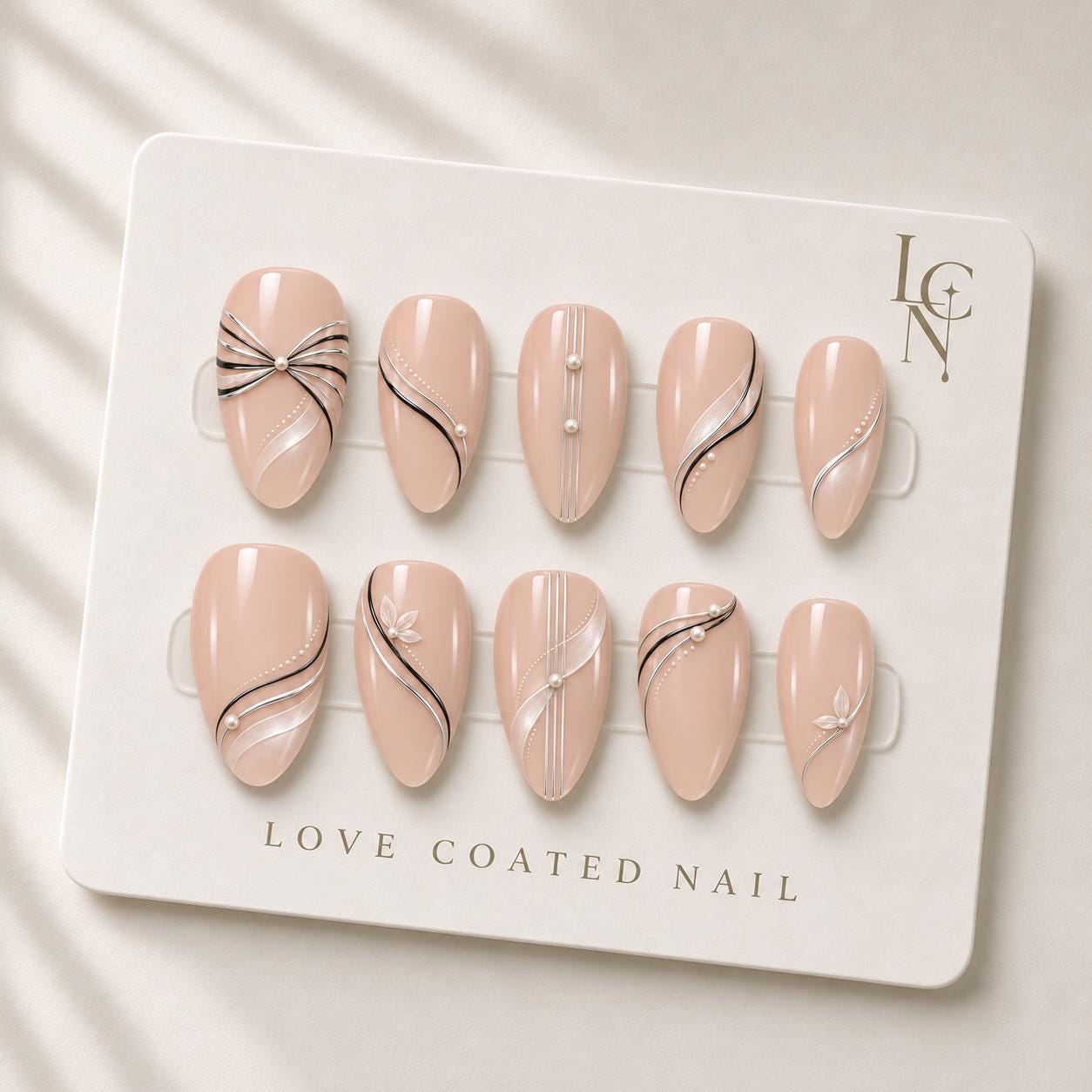
Yes, the pearl and chrome embellishments used on Love Coated Nail’s luxury press‑on sets are generally safe for most people with sensitive skin, provided the nails are applied correctly and the wearer follows a few dermatologist‑approved precautions. The materials—chrome powder, acrylic base, and cultured pearl accents—are non‑allergenic in their finished form, but the overall safety depends on how they interact with an individual’s skin barrier.
Understanding the Materials Behind Pearl and Chrome
Love Coated Nail’s designs incorporate acrylic, gel polish, chrome powder, and pearl embellishments. Acrylic is a polymer that hardens into a stable, inert surface once cured. Chrome powder is a fine metallic pigment that adheres to the nail surface through a gel base, creating a reflective finish. The pearl accents are typically small, cultured pearls or synthetic resin beads that are glued onto the nail. All of these components are widely used in professional nail salons and are considered low‑risk for allergic reactions when fully cured.
However, the risk of irritation usually stems from two sources: residual chemicals that have not fully set, and the adhesive used to attach the press‑on nail to the natural nail. Adhesive tabs contain a pressure‑sensitive polymer that can cause contact dermatitis in a small subset of users. Nail glue, which contains cyanoacrylate, may emit a mild irritant odor and can cause a brief sting if it contacts the cuticle.
What Dermatologists Look For
Dermatologists evaluate nail products based on three criteria: (1) the potential for allergen exposure, (2) the breathability of the material, and (3) the likelihood of mechanical irritation. Acrylic and chrome powder are non‑porous, meaning they do not trap moisture against the skin, which reduces the chance of fungal growth. The pearl beads are smooth and do not have sharp edges that could snag the cuticle.
For people with known sensitivities to acrylic or cyanoacrylate, a patch test is recommended. Apply a small piece of the adhesive or a trimmed nail tip to the inner forearm for 24 hours. If redness, itching, or swelling occurs, it is best to avoid that specific product or switch to adhesive tabs that are fragrance‑free and hypoallergenic.
Practical Tips for Sensitive‑Skin Wearers
1. Choose the Right Adhesive: If you have a history of contact dermatitis, start with the included adhesive tabs rather than nail glue. Tabs are less likely to cause a chemical reaction because they do not contain cyanoacrylate. 2. Prep the Natural Nail: Clean the nail surface with an alcohol wipe to remove oils and residue. Lightly buff the nail plate to create a smooth surface for the press‑on to adhere without excessive pressure. 3. Avoid the Cuticle: When applying the nail, keep the adhesive away from the cuticle edge. Direct contact with glue or tabs can irritate the delicate skin there. 4. Limit Wear Time: For sensitive skin, a shorter wear period—1 to 2 days with tabs—is advisable. Prolonged wear can increase moisture buildup under the nail, which may lead to irritation. 5. Remove Gently: Soak the nail in warm, soapy water for a few minutes before gently prying it off. This reduces the need for forceful pulling, which can damage the cuticle.