
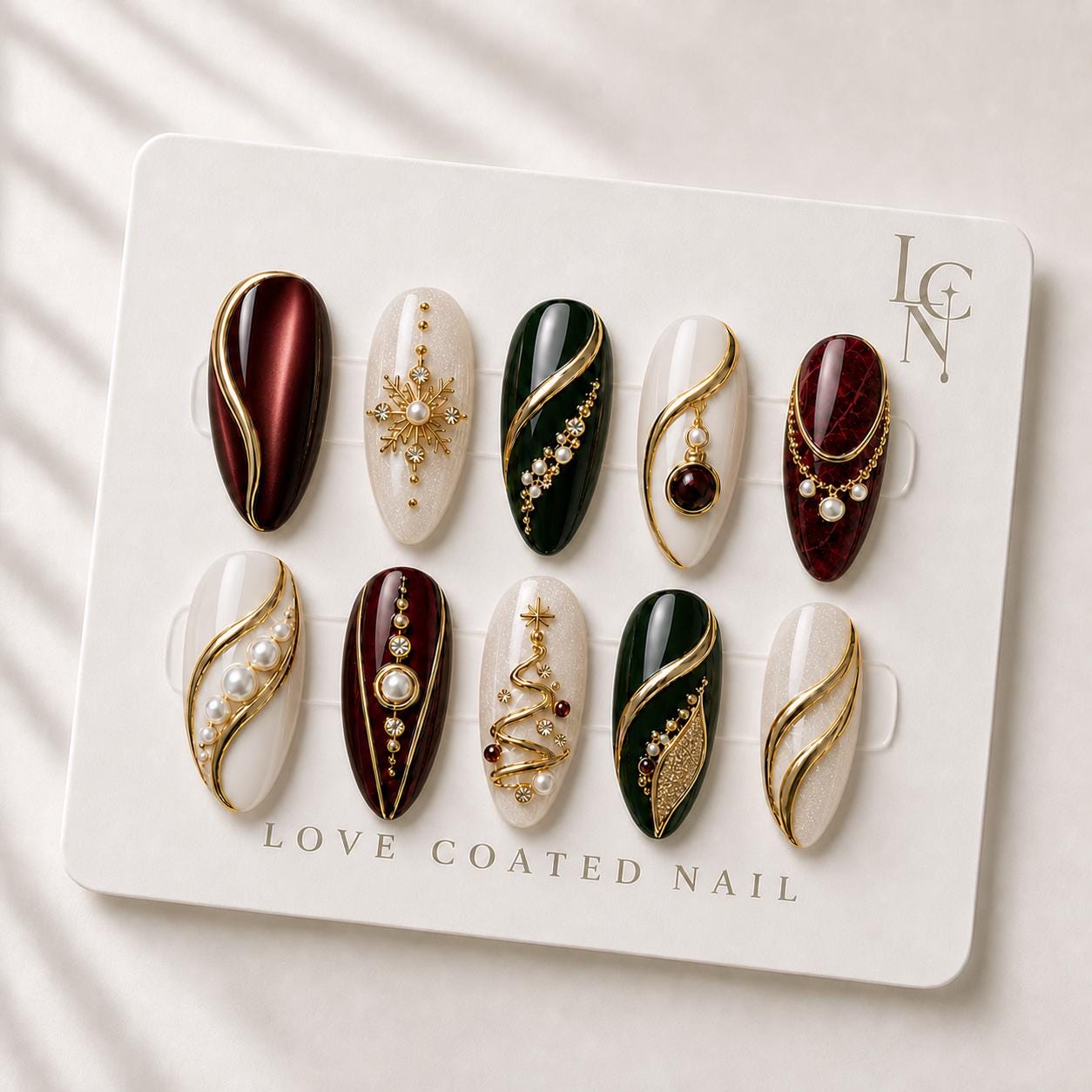
Yes, gold chrome accents on luxury press‑on nails are generally safe for sensitive skin when applied correctly with a suitable glue, but the overall safety depends on the specific materials in the nail and adhesive, as well as how you prepare and remove them.
Understanding the Materials Behind Gold Chrome Accents
Love Coated Nail’s holiday set uses a combination of soft gel, gel polish, cat eye gel, chrome gel, gold liner, and pearls. The gold chrome effect is created by a thin layer of chrome gel that contains metallic pigments suspended in a polymer matrix. These pigments are inert and do not release metal ions under normal wear. The underlying gel base is also formulated to be low‑irritant, which is why many nail artists consider it suitable for most skin types. However, the presence of any additive—such as fragrance, stabilizers, or residual solvents—can trigger a reaction in highly sensitive individuals.
Common Sensitivities and What Triggers Them
Sensitive skin reactions to press‑on nails usually stem from two sources: the nail material itself and the adhesive. For the material, the most frequent culprits are nickel or other metal alloys that might be present in decorative elements, and certain polymer additives that can act as allergens. In Love Coated Nail’s gold chrome, the metallic pigments are typically aluminum‑based, which is less likely to cause nickel‑related allergies, but a patch test is still advisable.
Adhesive glue can contain cyanoacrylate, which is a strong bonding agent but may cause irritation for some users, especially if it contacts the cuticle or skin. The glue included with the set is designed for a 3‑4 week wear time, indicating a formulation that balances strength with skin compatibility. Still, if you have a history of reactions to nail glue, consider using the provided adhesive tabs for a shorter, gentler wear.
Best Practices for Glue Application on Sensitive Skin
1. Prep the Natural Nail – Clean the nail surface with an alcohol wipe to remove oils and residue. This reduces the chance of glue seeping under the press‑on and irritating the skin. 2. Apply Glue Sparingly – A thin line of glue on the press‑on nail is sufficient. Excess glue can overflow onto the cuticle, where it is most likely to cause irritation. 3. Avoid Direct Contact with Cuticles – When positioning the nail, ensure the glue does not touch the cuticle or skin. If a small amount does, wipe it away immediately with a cotton swab dipped in acetone or nail polish remover. 4. Use a Protective Barrier – Some users with extreme sensitivity apply a thin layer of a hypoallergenic barrier cream (e.g., a silicone‑based primer) around the nail edge before gluing. This creates a seal that keeps glue away from the skin. 5. Monitor Wear Time – Even with a low‑irritant formulation, prolonged wear can increase the risk of a reaction. If you notice redness, itching, or swelling, remove the nails promptly and give your natural nails a break.