
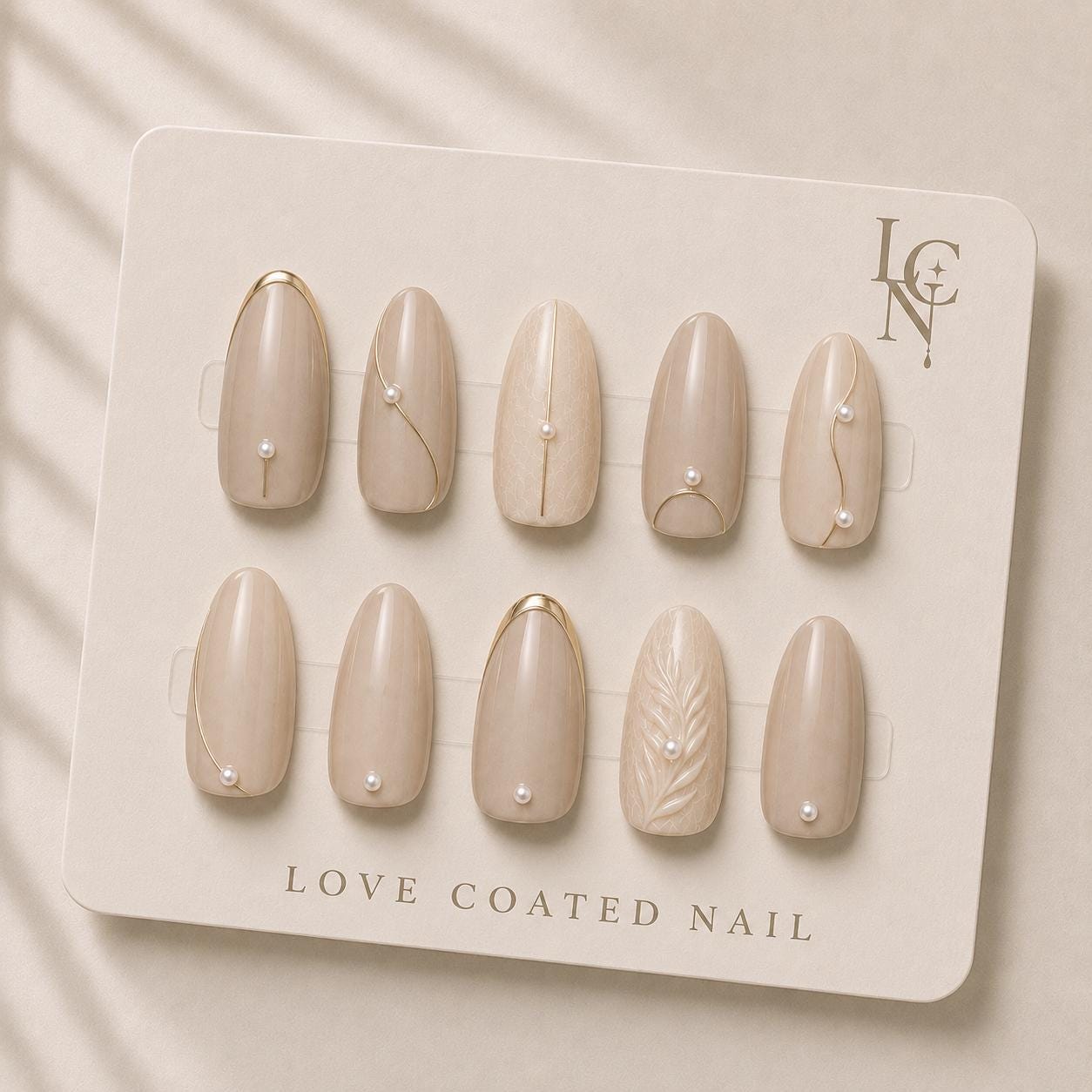
Adhesive tabs are generally safe for most people with sensitive skin, but they are not completely risk‑free. The tabs supplied with Love Coated Nail’s Pearl Press On Nails are formulated to reduce irritation, and many users find them gentler than liquid nail glue. However, individuals with extreme skin reactivity should still test a small area first and follow careful application steps to avoid a breakout.
How Adhesive Tabs and Nail Glue Differ Chemically
Adhesive tabs are pre‑cut, pressure‑sensitive pads that contain a polymer matrix designed to bond with keratin when pressed. The formulation typically avoids solvents and contains fewer volatile organic compounds than traditional nail glue. Nail glue, by contrast, is an acrylic‑based resin that cures through a chemical reaction with moisture on the nail surface. This curing process can release small amounts of acrylate monomers, which are known irritants for some people. Because tabs do not require a curing period, they often produce less heat and fewer fumes, which can be advantageous for sensitive skin.
Recognizing Common Skin Reactions
When an adhesive contacts the peri‑nail skin, three types of reactions are most common: mild erythema (redness), contact dermatitis (itchy rash), and, in rare cases, a localized allergic response. Mild redness usually resolves within a few hours and may be managed with a cool compress. Contact dermatitis appears as a more persistent itch, sometimes with small vesicles, and suggests that the skin’s barrier has been compromised. An allergic response can include swelling, intense itching, and spreading redness beyond the immediate nail area. If any of these symptoms persist beyond 24 hours, it is advisable to remove the press‑on nails and discontinue use of the adhesive.
Best Practices for Applying Tabs on Sensitive Skin
1. Prep the Nail Bed – Clean the natural nail with an alcohol wipe (included with the set) to remove oils and residue. Allow the nail to dry completely; moisture can interfere with the adhesive bond and increase the chance of skin irritation. 2. Trim and File – Shape the natural nail to a smooth surface using the provided nail file. Rough edges can create pressure points that irritate the skin. 3. Use a Small Test Patch – Apply a single tab to a less visible nail and leave it for 30 minutes. Observe the skin for any signs of redness or itching before proceeding with the full set. 4. Apply Light Pressure – Press the tab onto the nail for about 10 seconds, ensuring even contact. Avoid sliding the tab, which can shear the skin and cause micro‑abrasions. 5. Avoid Over‑lapping the Cuticle – Position the tab just short of the cuticle line. Over‑lapping can trap moisture and increase the risk of dermatitis.
These steps help maintain a stable bond while minimizing mechanical stress on the delicate skin around the nail.
When Glue May Be a Better Choice—or Not
Although tabs are often preferred for sensitive skin, there are scenarios where glue might be more appropriate. If a user needs the press‑on nails to last beyond the typical 1–2 day tab wear time, a high‑quality, hypoallergenic nail glue can provide a longer hold (up to 3–4 weeks according to the product description). In such cases, selecting a glue labeled “latex‑free” or “acrylate‑free” can reduce the risk of irritation. However, for anyone with a known allergy to acrylates, glue remains a higher‑risk option. In these instances, medical‑grade skin‑friendly adhesives, such as silicone‑based strips, can serve as an alternative, though they are not included with the Love Coated Nail set.